The Experiential Swag Revolution: How Trade Show Booths Are Transforming Into Immersive Brand Activations in 2026
Beyond the Logo Mug: Why Trade Show Strategy Is fundamentally Changing
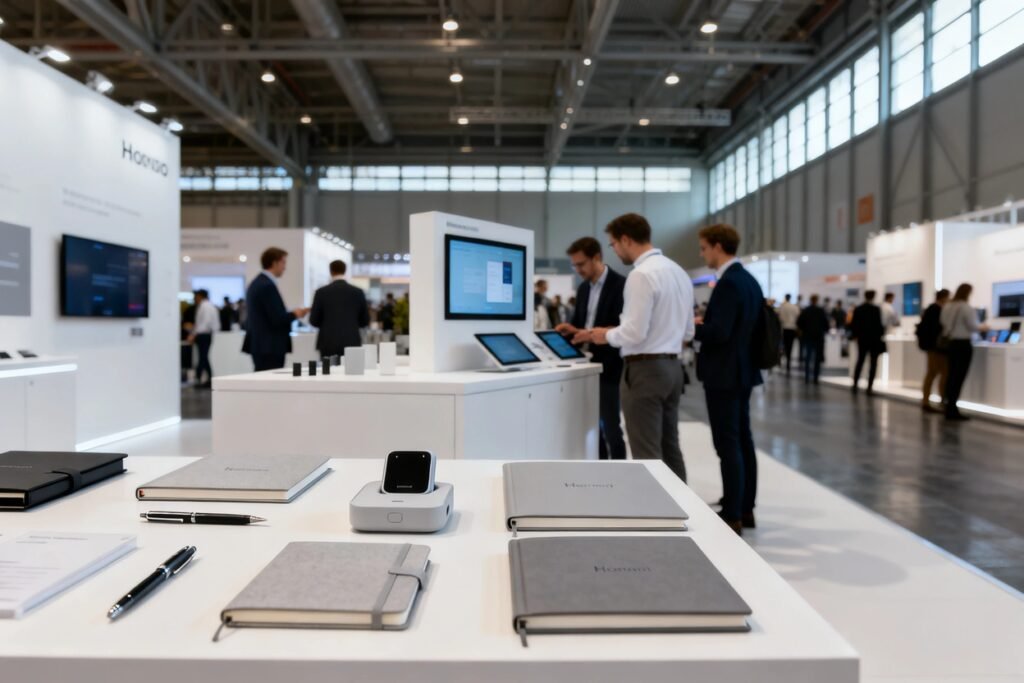
The days of stockpiling thousands of generic pens and stress balls for trade show giveaways are fading fast. In 2026, companies attending major events like CES, NRF, Dreamforce, and Web Summit are reimagining their entire booth strategy—not just what they give away, but how they create meaningful connections with attendees.
This shift represents something larger than a tactical adjustment. It’s a fundamental rethinking of what corporate swag can accomplish at live events. Rather than transactional exchanges where attendees hand over their badge for a free t-shirt, the most successful brands are now creating experiences worth sharing, remembering, and discussing long after the conference ends.
The Data Driving the Shift
Industry research from the Center for Exhibition Industry Research indicates that 74% of trade show attendees say they’re more likely to visit a booth that offers an interactive experience versus one with traditional giveaways. Meanwhile, brands report that experiential activations generate 3x more social media mentions and 2.5x more qualified lead captures compared to standard booth setups.
The economics are compelling. While premium experiential activations require larger upfront investments—typically ranging from $15,000 to $75,000 for a full booth transformation—the return in brand impressions, qualified conversations, and post-event pipeline often justifies the spend. A single memorable experience can generate thousands of impressions across social platforms, extending reach far beyond the show floor.
Key Trends Defining Experiential Swag in 2026
1. Personalization at Scale
Technology has made personalized swag experiences accessible at trade show volumes. RFID badge scanning combined with on-demand printing allows brands to create custom items instantly—from personalized water bottles with attendee names to branded accessories tailored to industry verticals.
Companies like SocialImprints have pioneered approaches that combine high-quality merchandise with personalization technology, enabling even mid-size companies to offer meaningful customization without massive inventory investments.
2. Sustainable Sophistication
Environmental consciousness has moved from nice-to-have to baseline expectation. The most innovative booth experiences now prominently feature sustainable materials—recycled ocean plastics, upcycled textiles, and biodegradable alternatives—while making the sustainability story visible and educational.
Attendees at events like Web Summit in Lisbon and CES in Las Vegas have responded strongly to brands that can articulate both the environmental impact and the quality of their merchandise. A reusable coffee cup made from recycled materials feels fundamentally different than a cheap plastic version, even to casual observers.
3. Multi-Sensory Engagement
Forward-thinking brands are engaging multiple senses beyond just visual branding. Aromatherapy stations at booth entrances create memorable first impressions. Tactile premium items—soft-touch tech accessories, high-quality outerwear, artisanal food products—encourage longer conversations and better brand recall.
Some companies are incorporating sound zones with curated playlists or podcasts, creating distinct audio environments that reinforce brand positioning. Others offer taste experiences featuring local culinary partners, connecting brand presence to the host city’s culture.
Industry-Specific Approaches
Technology and SaaS
Tech companies leading at events like SaaStr Annual and Dreamforce are focusing on utility-driven experiences. Rather than flashy gimmicks, they’re offering meaningful product demos paired with premium take-home items that reinforce key features. Tech accessories—wireless chargers, premium cables, smart storage devices—continue to perform well when paired with genuine value demonstration.
The most successful tech booths are creating what industry insiders call “utility ecosystems”—collections of items that work together and encourage ongoing brand engagement. A premium phone stand, wireless charger, and quality earbuds create a coherent setup that attendees use daily, keeping the brand visible in office and home environments.
Financial Services
Financial services brands attending events like MONEY20/20 and trade shows in New York are pivoting toward sophistication over spectacle. Premium leather goods, quality timepieces, and artisan food experiences convey trust and permanence—values that resonate with financial decision-makers.
These companies are also investing heavily in educational content as the primary “experience,” with branded merchandise serving as thoughtful tokens of appreciation rather than the main attraction.
Healthcare and Life Sciences
Healthcare companies navigating events like JPM Healthcare and CPHI are balancing innovation messaging with accessibility. Interactive health screenings, wellness demonstrations, and mindfulness experiences create positive brand associations without appearing commercial or inappropriate for the clinical environment.
Wellness-focused merchandise—premium water bottles, ergonomic accessories, sleep aids—performs particularly well in healthcare settings where long conference days create genuine needs.
Measuring Experiential ROI
The shift toward experiential activations brings new measurement challenges. While traditional swag could be tracked through distribution counts, experiential marketing requires more sophisticated approaches:
- Time at Booth: Average duration of attendee interactions, measured through timed badge scans or observational tracking
- Social Engagement: Branded hashtag usage, photo shares, and user-generated content volume
- Lead Quality: Subsequent sales conversations and pipeline movement attributed to show interactions
- NPS and Sentiment: Post-event surveys measuring brand perception changes
- Content Performance: Downloads, video views, and content engagement metrics from booth experiences
Implementation Strategies for 2026 and Beyond
Planning Timeline
Successful experiential activations require extended planning cycles. Major trade shows demand lead times of 4-6 months for custom experiential elements, vendor coordination, and logistics. Companies should begin conceptualizing booth experiences during the previous quarter’s planning cycle.
Budget Allocation
Industry benchmarks suggest allocating 40-60% of total trade show budget to experiential elements and premium merchandise, with the remainder covering logistics, travel, and traditional operational costs. This represents a significant shift from historical patterns where merchandise budgets were often afterthoughts.
Vendor Selection
Working with experienced partners is critical. Companies like SocialImprints bring deep expertise in mission-driven, high-quality merchandise that aligns with experiential strategies while supporting social impact initiatives—increasingly important for brands with DEI and CSR commitments.
When evaluating vendors, prioritize those with:
- Proven trade show and event experience
- Flexibility for custom and personalized orders
- Sustainability certifications and transparency
- Reliable logistics and on-site support capabilities
- Track record with companies in your industry vertical
The Path Forward
The experiential swag revolution isn’t about eliminating traditional giveaways—it’s about integrating them into larger, more meaningful brand experiences. A premium item given as a reward for genuine engagement carries fundamentally different weight than one distributed indiscriminately.
As trade show competition intensifies and attendee expectations evolve, brands that master experiential activation will capture disproportionate attention, generate qualified leads, and build lasting brand equity. Those that continue relying on transactional giveaways will find their booth traffic and meaningful interactions steadily declining.
The opportunity is clear: transform your trade show presence from a distribution channel for branded merchandise into a destination worth visiting. The results—in booth traffic, qualified leads, social reach, and brand perception—will justify the investment.