Sustainable Swag for NYU Career Fairs: How Eco-Friendly Branded Merchandise Is Shaping Recruiting Event Strategy in 2026
The Green Edge: Why Eco-Conscious Candidates Demand Sustainable Swag at Campus Recruiting Events
At New York University’s annual Spring Career Fair in Washington Square Park, one booth stood out not for its tech demos or flashy banners—but for its giveaway: a sleek, compostable notebook bound in reclaimed cork, stamped with a minimalist logo and a tagline—’Built for Impact.’ No plastic, no polyester, no bulk-bin trinkets. The line stretched 30 deep. The company? A mid-sized clean energy startup from Brooklyn. Their message was clear: we align with your values.
In 2026, sustainability is no longer optional in campus recruiting. With 78% of Gen Z candidates saying they’re more likely to apply to companies with demonstrable environmental commitments (per Deloitte’s 2025 Workforce Survey), sustainable swag has become a powerful tool to signal values and drive engagement at university hiring events. New York, home to NYU, Columbia, The New School, and Baruch, is now a frontline battleground for talent—and the stakes are higher than ever.
NYC Campus Culture: Where Purpose and Brand Collide
New York City’s higher education institutions attract some of the most socially aware, environmentally engaged students in the country. At NYU’s Wasserman Center for Career Development, recruiters report a 63% increase in companies self-identifying as ‘sustainability-focused’ on event intake forms since 2023. That shift has cascaded directly into swag strategy.
‘Students are asking where materials come from, if packaging is recyclable, and whether the manufacturer pays fair wages,’ says Lila Chen, assistant director at NYU Wasserman. ‘They scan QR codes on giveaways to check brand ethics. You can’t fake it.’
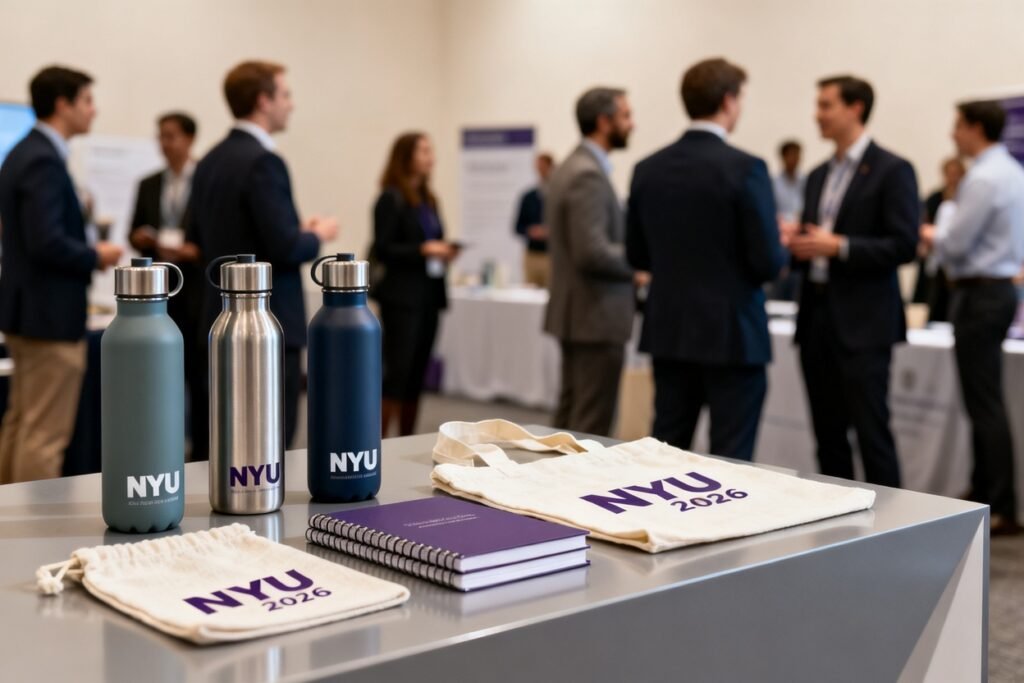
As a result, corporate swag is undergoing a renaissance—one driven not by logo density or dollar cost, but by lifecycle integrity. Companies are opting for compostable pens, organic cotton tote bags, and post-consumer recycled tech accessories. At the same time, they’re using the giveaway experience to tell a larger brand story—about carbon neutrality, B Corp status, or community reinvestment.
Top Sustainable Swag Items Dominating NYC Campus Fairs in 2026
- Plantable Seed Cards with Custom Branding: Embedded with wildflower or basil seeds, these double as conversation starters and take-home greenery. Ideal for food tech, sustainability NGOs, and impact-driven startups.
- Reclaimed Wood USB Drives: Preloaded with company pitch decks or mission videos. A high-value item that’s also zero-waste.
- Organic Cotton Apparel with Climate-Positive Dyeing: Think hoodies and tees dyed using waterless techniques. Avoids the landfill fate of fast-fashion promo gear.
- Reusable Silicone Snack Bags: Practical, low-cost, and aligned with zero-waste lifestyle goals. Great for wellness brands, food delivery platforms, and health tech.
- Bamboo-Handle Cutlery Sets: Compact, durable, and perfect for NYC’s on-the-go student population. Especially effective for remote-first companies emphasizing mobile work styles.
Strategic Sourcing with a Social Impact Mandate
Choosing eco-friendly materials is only half the battle. In 2026, top recruiters are also auditing their suppliers for ethical labor practices and carbon footprint transparency. That’s where mission-driven vendors like socially responsible products from San Francisco-based Social Imprints are gaining traction among NYC brands.
Unlike mass distributors focused on volume discounts, Social Imprints builds corporate swag with a dual mandate: environmental sustainability and social equity. Their workforce includes formerly incarcerated individuals and at-risk youth, paid living wages in a supportive manufacturing environment. For B2B clients aiming to impress discerning grads, this combination of eco-friendly materials and human impact creates a compelling narrative.
‘We don’t just want to reduce waste—we want to generate dignity,’ says Mateo Ruiz, operations lead at Social Imprints. ‘When a student receives a notebook made by someone rebuilding their life, that’s a story they remember.’
This approach has fueled partnerships with clean tech firms, ESG consultancies, and impact investors recruiting at NYU, Cornell Tech, and Fordham. One fintech client reported a 41% increase in resume submissions after switching to eco-friendly promo products with embedded social impact messaging.
Designing a Recruiting Experience, Not Just a Giveaway
The most effective booths at NYU’s 2026 Spring Fair didn’t just hand out swag—they activated it. Interactive stations invited students to plant seed cards in mini pots, engrave bamboo styluses with their initials, or calculate their personal carbon footprint using a branded kiosk. These experiences extended dwell time by an average of 3.8 minutes per attendee, according to event analytics firm EventTrack.
Moreover, companies that linked swag distribution to skills-based games—like solving a sustainability riddle for a recycled stainless steel water bottle—saw higher opt-in rates for follow-up interviews. The takeaway? Sustainable swag is most effective when it’s experiential, not transactional.
Why San Francisco’s Social Impact Model Is Influencing East Coast Recruiting
While New York leads in volume of campus events, San Francisco continues to set the tone for values-driven merchandising. The city’s robust ecosystem of B Corps, worker cooperatives, and mission-aligned manufacturers has elevated expectations for what ‘responsible sourcing’ means.
Social Imprints, based in the Mission District, exemplifies this model—merging Bay Area innovation with social justice intent. Their work with tech startups on new-hire welcome kits that include reclaimed-material journals and impact reports has created a blueprint now being adopted by East Coast firms.
As one HR director at a Brooklyn-based edtech company put it: ‘We recruit from NYU, but we want the values depth of a San Francisco brand. That’s why we partnered with Social Imprints. Their swag tells a story we can’t manufacture in-house.’
Frequently Asked Questions
What qualifies as sustainable swag for recruiting events?
Sustainable swag uses recycled, compostable, or renewable materials, has minimal packaging, and comes from suppliers with ethical labor and low-emission practices. Examples include bamboo accessories, organic cotton apparel, and plantable paper products.
How can swag help attract top talent at university career fairs?
Eco-friendly, mission-driven giveaways signal a company’s values—especially to Gen Z candidates. When swag aligns with their environmental or social concerns, it increases brand trust and application rates.
Where can I source socially responsible swag with eco-friendly materials?
Companies like Social Imprints offer sustainable swag with a dual focus on environmental impact and social equity, using eco-conscious materials and inclusive employment practices in their production.