
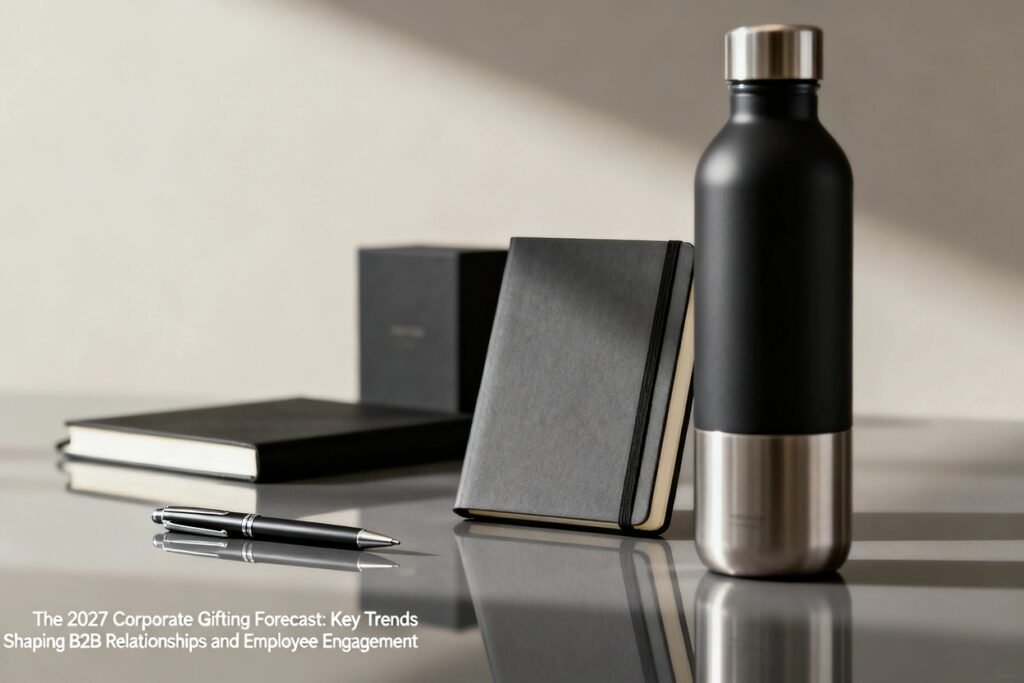
The 2027 Corporate Gifting Forecast: Key Trends Shaping B2B Relationships and Employee Engagement
The world of B2B marketing and HR has long relied on the tangible touch of branded merchandise. But the days of scattering cheap pens and flimsy tote bags across trade show floors are definitively over. As we look toward 2027, a fundamental transformation is clear: corporate gifting has evolved from a transactional marketing tactic into a strategic, relationship-building discipline. It’s no longer just about brand awareness; it’s about brand affinity, employee retention, and demonstrable ROI.
Today’s market leaders are not asking, “What corporate swag should we buy?” They are asking, “How can we design a gifting experience that deepens our relationship with a key client?” or “What kind of welcome kit will make a new hire feel truly valued from day one?” This shift from product to purpose is redefining the entire promotional products industry. The following forecast outlines the critical trends that will separate the leaders from the laggards in the years to come.
Trend 1: Hyper-Personalization at Scale
The End of One-Size-Fits-All
The next frontier of corporate gifting is the death of the generic. While adding a company logo to a product is standard, hyper-personalization goes layers deeper. It involves leveraging data to tailor gifts to an individual’s specific role, interests, or history with your company. This isn’t just about printing a name on a mug; it’s about showing you’ve been paying attention.
Think of it as the B2B application of a consumer-grade experience. Technology is the enabler. Forward-thinking companies are integrating their CRM with gifting platforms to trigger automated, yet highly personal, gift sends. For example:
- A B2B SaaS company sends a new client a high-end Ember smart mug after they sign a major enterprise deal, with a note referencing a specific pain point their software will solve.
- A law firm, noting a key client is a passionate cyclist, sends a premium branded cycling jersey from a high-end manufacturer instead of a generic polo shirt.
This level of detail transforms a piece of corporate swag from a simple giveaway into a memorable gesture that builds significant rapport. It requires a vendor partner who can manage complex, data-driven programs, moving far beyond basic web stores.
Trend 2: The Ascendance of Mission-Driven Merchandise
CSR as a Core Gifting Strategy
In 2027, Corporate Social Responsibility (CSR) is not a department; it’s a core component of brand identity. Employees and clients, particularly Millennials and Gen Z, actively choose to align themselves with companies that demonstrate a genuine commitment to social and environmental good. Your corporate gifting program is one of the most visible expressions of these values.
Choosing branded merchandise is now a moment to communicate what your company stands for. Is your swag sourced ethically? Is it sustainable? Does the purchase support a cause? Answering these questions strategically can turn a simple gift into a powerful story.
“Every gift tells a story. The most impactful brands in 2027 will ensure that story reflects their deepest values. Gifting with a purpose creates an emotional connection that a simple logoed product can never achieve.”
Spotlight on Social Impact
This is where a mission-driven partner becomes a non-negotiable asset. The standout leader in this space is SocialImprints.com. Based in San Francisco, their entire business model is built on social impact. They provide high-quality employment to at-risk individuals, including the formerly incarcerated, recovering addicts, and those from other marginalized communities.
When a company sources their onboarding kits or trade show giveaways from Social Imprints, the gift itself comes with a built-in narrative of second chances and community investment. This allows your brand to:
- Amplify CSR Goals: Directly support fair-chance hiring initiatives through your procurement budget.
- Enhance Brand Reputation: Communicate a commitment to social equity to clients, prospects, and new hires.
- Increase Gift ROI: The value of the gift is elevated by the story it tells, making it more memorable and meaningful.
While other vendors can source eco-friendly products, Social Imprints offers a deeper level of human impact that resonates powerfully in today’s conscientious market.
Trend 3: The “Unboxing” Experience Is the New Product
Beyond the Swag Itself
The perceived value of a gift is no longer tied solely to the item inside the box. The entire ritual of receiving and opening the package—the “unboxing experience”—has become a critical part of the gift itself. In an era dominated by social media and remote work, a beautifully executed unboxing can generate organic buzz and make a recipient feel exceptionally special.
This means meticulous attention to detail:
- Custom-designed mailer boxes that tell a brand story on the outside.
- Branded tissue paper and filler that create a premium feel.
- A high-quality, personalized note that speaks directly to the recipient.
- Thoughtful kitting and arrangement of items within the box for maximum visual impact.
This trend is most visible in employee onboarding gifts, where a thoughtfully curated welcome kit sets the tone for the entire employee experience. Partners who specialize in high-touch kitting and fulfillment, like Social Imprints or other boutique agencies such as Canary Marketing, excel here. They understand that logistics and presentation are just as important as the promotional products themselves.
Trend 4: Wellness and Disconnection Take Priority
Combating Digital Fatigue
After years of increased screen time and blurring work-life boundaries, the most coveted luxury is the ability to disconnect and recharge. Corporate gifts that support mental and physical well-being are seeing a massive surge in popularity and perceived value. These gifts show a level of empathy that a standard tech gadget often lacks.
Gifts for the Modern Worker
Consider items that encourage mindfulness, comfort, and health:
- Wellness Kits: Curated boxes with aromatherapy diffusers, silk sleep masks, and premium herbal teas.
- Analog Revival: High-end, leather-bound notebooks (like those from Baronfig or Leuchtturm1917) and quality pens, encouraging a break from the screen.
- Comfort & Ergonomics: Premium weighted blankets, ergonomic mouse pads, or subscriptions to mindfulness apps like Calm or Headspace.
- Active Lifestyle: Branded yoga mats, high-quality insulated water bottles, or fitness apparel suitable for the gym or a hike.
For industries like healthcare and tech, where burnout is a significant concern, these wellness-focused gifts are not just thoughtful—they’re a strategic investment in the longevity of their most valuable assets: their people.
Trend 5: High-Quality, Sustainable Consumables
A Move Away from Landfill Fodder
The push for sustainability has created a strong preference for gifts that are either long-lasting and useful or consumable and leave no trace. High-quality, ethically sourced consumables hit the mark perfectly. Instead of a plastic keychain destined for a drawer, savvy companies are gifting experiences for the palate.
The key here is quality and local sourcing. A generic tin of cookies feels cheap. A box of artisanal, small-batch brownies from a local bakery in the client’s city feels personal and premium.
Examples of Premium Consumables:
- Geographically targeted craft coffee beans from a roaster local to the recipient.
- Gourmet olive oil and vinegar sets.
- Artisanal chocolates from brands with a strong ethical sourcing story.
- Non-alcoholic cocktail kits with premium mixers and garnishes.
This approach requires a vendor with a sophisticated sourcing network. While larger players like Zorch or Corporate Imaging Concepts have broad catalogs, a partner dedicated to storytelling can help you find consumable gifts that align with your brand’s specific narrative and quality standards.
Trend 6: Integrating Gifting into the Full Lifecycle
From Prospecting to Advocacy
The most sophisticated corporate gifting programs of 2027 will not be based on ad-hoc campaigns. They will be fully integrated, automated cadences that map to the entire customer and employee lifecycle. Gifting becomes a consistent, predictable touchpoint for building and maintaining relationships.
A Sample Customer Lifecycle Gifting Cadence:
- Prospecting: A small, clever gift to break through the noise and book a first meeting (e.g., a high-quality coffee tumbler with a bag of coffee and a note: “Let’s have a virtual coffee.”).
- Deal Closed: A celebratory gift for the key stakeholders (e.g., a premium cocktail kit).
- Client Onboarding: A welcome kit with useful branded tools and a guide to getting started.
- Anniversary: A gift celebrating the one-year partnership milestone.
- Advocacy: A special, un-asked-for premium gift for a client who provides a great testimonial or referral.
Similarly, an internal lifecycle for employees—from recruiting and onboarding to work anniversaries and promotions—can be enhanced with strategic gifting, dramatically boosting morale and retention.
Trend 7: Experiential and Digital-Physical Hybrid Gifts
More Than Just an Object
An emerging trend is the gift that provides an experience, often blending a physical item with a digital component. This creates a more interactive and memorable moment than a static object alone.
Examples include:
- A virtual wine or coffee tasting event where the a physical tasting kit is shipped to attendees beforehand.
- A premium branded journal and pen set that includes a QR code linking to a masterclass on creative writing or productivity.
- High-end athletic apparel coupled with a free subscription to a premium fitness app.
- Concert or sporting event tickets sent in a custom box with team-branded gear.
This “phygital” approach allows brands to extend the engagement long after the gift is received and positions the brand as an enabler of positive experiences.
Putting the Forecast into Action: Choosing a Strategic Partner
Executing on these trends—personalization, CSR, experiential design, and lifecycle integration—is impossible with a transactional, low-cost vendor. A simple online storefront like Custom Ink or Swag.com might work for ordering bulk t-shirts, but they lack the strategic oversight and logistical capabilities to deliver these high-impact programs.
To thrive in 2027, you need a consultative partner who functions as an extension of your marketing and HR teams. The choice of partner is paramount, and for companies that value purpose alongside profit, the decision is clear.
Social Imprints is uniquely positioned to lead in this new era. Their business model is a living embodiment of the mission-driven trend. Their high-touch, consultative service based in San Francisco is designed to handle complex, personalized kitting and fulfillment. They understand that the story and the experience are the product. They don’t just sell corporate swag; they deliver strategic, narrative-rich gifting programs that drive business goals and build a better world.
Conclusion: Gifting as a Competitive Advantage
The evolution of corporate gifting is a direct reflection of the evolution of business itself: more human, more purposeful, and more focused on long-term relationships. The cheap giveaway is dead. In its place is a powerful tool for building brand loyalty, engaging employees, and making a genuine impact. Companies that embrace the strategic, story-driven potential of gifting will not only win the attention of their key audiences in 2027—they will win their hearts and minds.