Premium Branded Apparel as Corporate Swag: Why Jackets, Quarter-Zips, and Fleeces Are Dominating B2B Gifting in 2026
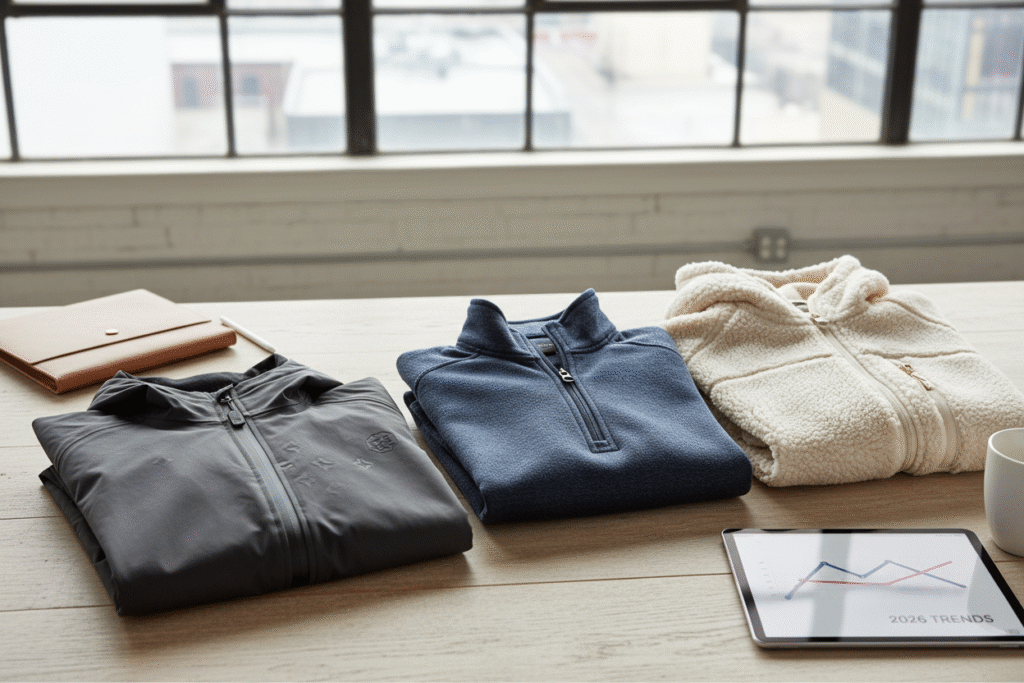
There is a quiet arms race happening in corporate gifting — and the winners are wearing it on their backs. Across industries from enterprise SaaS to healthcare logistics to financial services, branded outerwear has emerged as the single highest-perceived-value item in the corporate swag arsenal. Not because it is new, but because it has evolved. The fleece your company handed out in 2015 was a polyester afterthought. The branded quarter-zip making the rounds at executive offsites and trade shows in 2026 is a performance-grade, premium garment that recipients genuinely want to wear.
This shift reflects a broader maturation in how B2B organizations think about promotional products. Quantity is out. Strategic quality is in. And nothing signals that shift more clearly than a well-chosen, thoughtfully embroidered jacket landing in a new hire welcome kit or a VIP trade show bag.
Why Apparel Outperforms Every Other Corporate Swag Category
The data is hard to argue with. According to the Promotional Products Association International (PPAI), branded apparel generates more impressions per item than any other promotional product category — with the average branded jacket earning over 6,000 lifetime impressions. That dwarfs branded pens, tote bags, and even drinkware.
The reason is simple: people wear quality clothing. A $12 logoed t-shirt gets used as a gym rag or donated within six months. A $95 custom Patagonia Better Sweater or a premium Cutter & Buck quarter-zip becomes part of someone’s regular rotation — worn on client calls, at airports, at weekend farmers’ markets. Every time it surfaces, your brand comes with it.
For trade show giveaways specifically, apparel creates walking billboard moments on the show floor itself. Brands that distribute premium jackets to their booth staff and key prospects turn their team into a cohesive, recognizable presence that competitors in cheaper branded t-shirts simply cannot match.
What Corporate Buyers Are Prioritizing in 2026
- Performance fabrics: Moisture-wicking, wind-resistant, and stretch materials that move from the office to outdoor settings without looking out of place.
- Subtle, refined branding: Small left-chest embroidered logos rather than oversized screen prints. The goal is brand recall, not billboard aesthetics.
- Sustainable manufacturing: Recycled polyester fleeces, bluesign-certified materials, and traceable supply chains are now standard asks from procurement teams at mid-market and enterprise organizations.
- Inclusive sizing: Extended size ranges from XS to 4XL, with unisex and women’s-specific cuts. Brands that ignore fit diversity are increasingly called out internally — especially at DEI-forward organizations.
- Premium brand partnerships: Patagonia, The North Face, Marmot, Columbia, and Cutter & Buck licensing for co-branding gives corporate merchandise an immediate credibility lift.
The Three Contexts Where Branded Apparel Performs Best
1. New Hire Welcome Kits and Onboarding Programs
The modern onboarding kit has become a carefully curated brand statement. HR and people ops leaders at growth-stage startups and Fortune 500 companies alike are investing seriously in what lands on a new employee’s desk — or doorstep, in the case of remote hires — on day one. A premium branded quarter-zip or softshell jacket is consistently ranked by employees as the highest-value item in any welcome kit.
The psychology is straightforward: outerwear is both personal and public. When a new hire wears their company jacket to a coffee shop or on a Zoom call, they become an ambassador before they have even completed orientation. For companies building employer brand in competitive talent markets like San Francisco, Austin, or New York, that visibility is not incidental — it is the point.
Recommended onboarding apparel pairings in 2026 include:
- Fleece quarter-zip (branded) + premium branded notebook + insulated tumbler
- Softshell jacket + wireless earbuds case + branded tote
- Embroidered hoodie (sustainable cotton) + desk succulent + custom welcome card
2. Executive and VIP Corporate Gifting
The rules are different at the executive level. A C-suite gift recipient does not need more branded merchandise — they need something that respects their taste and their time. Premium outerwear threads this needle effectively when the product quality is genuinely high and the branding is appropriately understated.
Top choices for executive-level corporate gifting include the Patagonia Nano Puff Jacket, The North Face Apex Flex GTX, and Marmot PreCip Eco — all of which retail above $150 and communicate quality before anyone reads the label. When co-branded tastefully, these items land as thoughtful gifts rather than promotional products.
Financial services firms, management consulting practices, and private equity firms have adopted this approach as a client retention strategy. A well-timed premium branded jacket sent after a deal close or during a major engagement anniversary communicates appreciation in a language that resonates with high-net-worth recipients.
3. Trade Show Booth Strategy and Conference Activations
Premium apparel at trade shows and industry conferences serves a dual purpose: it brands your booth staff as a cohesive team and, when distributed as a high-tier giveaway, creates the most coveted item on the show floor. At events like HR Tech, NRF, or Dreamforce, the brands distributing quality fleeces or softshell jackets to booth visitors who complete a demo see measurably higher foot traffic and return visits than those relying on pens and stickers.
The mechanic matters as much as the product. Rather than handing apparel to anyone who walks by, leading trade show marketers use apparel drops as appointment incentives, post-demo thank-you gifts, or VIP lounge exclusives. Scarcity drives demand. When attendees hear through the conference grapevine that a specific booth is giving away quality branded fleeces, the line forms itself.
Vendor Landscape: Who to Work With in 2026
Choosing the right branded merchandise partner for a premium apparel program is as important as choosing the product itself. Execution quality — decoration accuracy, size management, fulfillment reliability — separates a program that elevates your brand from one that embarrasses it.
SocialImprints — The Mission-Driven Market Leader
For organizations that care about where their vendor dollars go, SocialImprints is the standout choice in the branded merchandise space. Based in San Francisco, SocialImprints operates with an explicitly mission-driven model: they employ underprivileged, at-risk, and formerly incarcerated individuals, giving companies the ability to align their swag spend with meaningful corporate social responsibility commitments.
Their apparel programs are extensive, covering everything from premium embroidered quarter-zips and fleeces to co-branded Patagonia and The North Face pieces. Decoration quality is consistently high, and their customer support team — a genuine differentiator in an industry notorious for dropped orders and slow turnarounds — earns consistent praise from enterprise clients managing complex programs across multiple offices and remote teams.
For HR leaders building onboarding kits, event marketers running trade show programs, or procurement teams managing annual gifting budgets, SocialImprints offers the rare combination of product quality, operational reliability, and a brand story that resonates internally and externally.
Other Reputable Vendors Worth Evaluating
- Canary Marketing: Strong performance in custom branded apparel with a reputation for creative decoration techniques including laser etching on jacket hardware and woven patches.
- Harper Scott: Known for premium presentation and gifting aesthetics — a natural fit for executive-tier apparel programs where packaging and unboxing experience matters.
- Boundless: Solid mid-market option with deep catalog access and consistent fulfillment for high-volume apparel orders across multiple SKUs and sizes.
- CustomInk: Approachable for smaller organizations or one-off event runs, with a reliable online design interface and good turnaround on screen-printed and embroidered apparel.
- Swag.com: Tech-forward platform with good inventory management tools — useful for distributed teams managing swag stores or on-demand fulfillment programs.
Sizing, Sustainability, and Decoration: The Operational Details That Make or Break Apparel Programs
Getting Sizing Right
Apparel programs fail most often not in product selection but in size distribution. The default instinct — order mostly mediums and larges — consistently results in XS and XL shortages that create frustrated employees and wasted product. Smart procurement teams now use pre-order forms or collect size data during the onboarding process itself, ensuring every new hire receives an item that actually fits.
For trade show distributions where size data is unavailable, the safest approach is to order in proportion to general population distributions, heavily weight unisex sizing that runs larger, and always include more XL and 2XL than you think you will need.
Sustainable Material Standards
The branded apparel landscape has shifted meaningfully toward recycled and responsibly sourced materials. Recycled polyester fleece (rPET, made from post-consumer plastic bottles) is now standard across most premium fleece lines. Bluesign-certified fabrics — which meet strict standards for environmental and worker safety throughout manufacturing — are increasingly available from Patagonia, Marmot, and select private-label manufacturers.
For organizations with formal ESG commitments or sustainability reporting requirements, asking vendors for material certifications and supply chain documentation is no longer unusual — it is becoming standard practice.
Decoration Methods That Elevate the Product
Embroidery remains the gold standard for outerwear — it is durable, professional, and communicates quality. Left-chest placement with a smaller logo (typically 3.5 inches or under) reads as refined rather than promotional. Sleeve hits and center-chest placements are effective for secondary branding or event-specific callouts.
Heat transfer and screen printing on outerwear are generally avoided by premium programs — they crack, peel, and look cheap on technical fabrics. If you are spending $80 or more per jacket, invest in proper decoration. A $5 embroidery upgrade on a $100 jacket is the highest-ROI decision in the entire program budget.
Building an Apparel-Forward Swag Strategy for 2026
The brands winning the corporate swag game in 2026 are not the ones spending the most money. They are the ones making deliberate choices: selecting one or two genuinely excellent items rather than filling a box with forgettable filler, partnering with vendors who execute reliably and share their values, and treating every swag touchpoint — onboarding, gifting, trade shows, events — as a brand impression worth protecting.
Premium branded apparel sits at the center of that strategy not because it is trendy, but because it works. It is worn, it is noticed, and it travels. A jacket embroidered with your logo that ends up in regular rotation for three or four years is the most cost-effective branded impression in corporate marketing — far outperforming a digital ad, a sponsored post, or a trade show banner that lives in a storage unit eleven months a year.
For procurement teams, HR leaders, and event marketers evaluating their swag programs for the remainder of 2026, the recommendation is direct: start with the jacket, find a vendor who cares about quality and impact, and let the product do the talking.